Now Welcoming New Patients

Bleeding, Swollen, or Receding Gums: Signs of Gum Disease You Should Not Ignore

A little blood in the sink after brushing can be easy to dismiss. Maybe you brushed too hard. Maybe you switched toothbrushes. Maybe it will disappear tomorrow.
Sometimes it does. But bleeding, swelling, tenderness, or gums that seem to be pulling away from the teeth are also common warning signs of gum disease. They deserve attention, especially if they keep happening.
Gum disease is extremely common, and its early stage can be quiet. Many people feel no significant pain until the condition has progressed. That is one reason regular dental care matters so much: a dentist can spot changes in the gums and supporting bone before teeth become loose or treatment becomes more involved.
Here is what to watch for, what may be causing it, and what you can do next.
What gum disease actually is
Gum disease is an infection and inflammation of the tissues around the teeth. It begins when sticky bacterial plaque is allowed to remain along the gumline. Plaque forms every day, even when someone takes good care of their teeth. If it is not removed thoroughly through brushing and cleaning between the teeth, it can harden into tartar, also called calculus.
Once tartar builds up, a toothbrush and floss cannot remove it. Professional cleaning is needed.
The earliest stage of gum disease is gingivitis. The gums may look red or puffy and may bleed when brushed or flossed. Gingivitis is usually reversible with consistent home care and professional cleaning.
If gingivitis is left untreated, it may progress to periodontitis. In periodontitis, inflammation affects the deeper structures that hold teeth in place, including the bone. Pockets can develop between the teeth and gums, collecting bacteria and making the area harder to clean. Bone loss from periodontitis cannot simply grow back on its own.
That sounds alarming, and honestly, it should motivate action. Still, a diagnosis of gum disease does not mean someone has failed at caring for their teeth. Genetics, medical conditions, medications, stress, smoking, hormonal shifts, and the shape or position of teeth can all affect gum health. The useful question is not “How did I get here?” but “What is happening now, and what treatment will help?”
Bleeding gums are not normal
Healthy gums should not bleed with routine brushing or flossing. Bleeding often means there is inflammation near the gumline, usually caused by plaque buildup.
A common mistake is to stop flossing when the gums bleed. That feels logical. If an area is bleeding, why irritate it more?
But when bleeding is caused by plaque-related gingivitis, avoiding the area lets more plaque stay behind. Gentle daily cleaning between the teeth is often part of the solution. It may take a week or two of consistent, careful brushing and interdental cleaning before mild bleeding begins to settle. If it does not improve, a dental visit is the right next step.
Bleeding can also happen for other reasons. A toothbrush with stiff bristles, aggressive brushing, poorly fitted dental appliances, some medications, pregnancy-related hormonal changes, and certain health conditions may play a role. A dentist can help sort out the cause instead of relying on guesswork.
Call for a dental assessment sooner if gum bleeding is frequent, heavy, spontaneous, or accompanied by other symptoms such as pain, swelling, bad breath, or loose teeth.
Swollen gums can signal an active problem
Gums should generally fit snugly around the teeth and appear pale pink, though natural pigmentation varies widely. Swelling may make them look shiny, bright red, dark red, or enlarged. They can feel sore while eating, brushing, or flossing.
Inflamed gums sometimes swell in only one spot. This may occur when food gets trapped between teeth, when plaque has accumulated around a difficult-to-reach area, or when there is an issue below the gumline. A pimple-like bump on the gums, pus, facial swelling, fever, or a bad taste in the mouth requires prompt dental care. Those symptoms can point to an abscess or another infection that should not wait.
Swelling around a partially erupted wisdom tooth can also be a concern, particularly in teens and young adults. Food and bacteria can become trapped beneath the flap of gum tissue around the tooth. In some cases, oral surgery may be discussed if wisdom teeth repeatedly cause pain, infection, or damage to nearby teeth.
Children can have swollen or bleeding gums too. Pediatric dentistry visits are useful not only for checking for cavities but also for teaching age-appropriate brushing and helping families identify gum concerns early. During orthodontic treatment, this matters even more because brackets and wires create extra places for plaque to hide.
Receding gums are more than a cosmetic concern
Gum recession means the gumline has moved away from the crown of the tooth, exposing more of the root surface. Teeth may start to look longer, but the change can be gradual enough that people do not notice it right away.
Recession is often linked with tooth sensitivity. Root surfaces do not have the same hard enamel coating as the visible part of a tooth, so cold water, sweet foods, or brushing can cause a sharp twinge. Exposed roots are also more vulnerable to decay.
Several factors can contribute to receding gums:
Gum disease that has damaged the supporting tissues around teeth
Brushing too hard or using a hard-bristled toothbrush
Naturally thin gum tissue or a family history of recession
Teeth that are crowded, rotated, or positioned outside the bony support
Clenching and grinding, especially where it creates excessive bite forces
Tobacco use
Lip or tongue piercings that repeatedly rub against the gums
Recession does not always mean advanced gum disease, but it is worth having assessed. The treatment depends on the cause. It may involve changes to brushing habits, periodontal cleaning, treatment for grinding, restorative dentistry for root decay or worn areas, or referral for gum grafting in selected cases.
Other signs people tend to miss
Bleeding and swelling are the symptoms most people know. Several others are easy to overlook because they do not seem connected to the gums at first.
Persistent bad breath or a bad taste may be related to bacteria below the gumline. A sudden change in the way teeth fit together when biting can signal movement caused by loss of support. Teeth that appear longer, spaces opening between teeth, or a tooth that feels loose should always be checked.
Some people notice that floss catches or snaps in an area where it never used to. Others have tenderness when they press on the gums, even if they have no pain while eating. These small changes are worth mentioning at a checkup.
Gum disease can progress quietly. Pain is not a reliable indicator of how serious it is.
Why some people face a higher risk
Plaque is the direct cause of most gum disease, but some factors make a person more likely to develop it or have a more severe form.
Smoking and vaping with nicotine can reduce blood flow to gum tissue and interfere with healing. Smoking can also mask bleeding, which means gums may look less inflamed than they actually are.
Diabetes and gum disease have a two-way relationship. High blood sugar can make infections harder to control, while severe gum inflammation can make blood sugar management more difficult. People with diabetes often benefit from particularly regular periodontal evaluations.
Pregnancy, puberty, menopause, and hormonal medications may make gums more reactive to plaque. This does not mean bleeding gums should be accepted as inevitable during these times. It means oral hygiene and professional monitoring become even more important.
Dry mouth also raises risk. Saliva helps rinse away food particles, buffer acids, and protect oral tissues. Many medications can reduce saliva flow, including some used for allergies, depression, anxiety, blood pressure, and pain. If your mouth often feels dry or sticky, bring it up during your appointment.
Stress, poor sleep, and clenching are not direct causes of plaque buildup, but they can make consistent oral hygiene harder and may worsen grinding-related gum recession or tooth wear. Human bodies are complicated. Dental care works best when it considers the whole picture.
What happens at a gum assessment
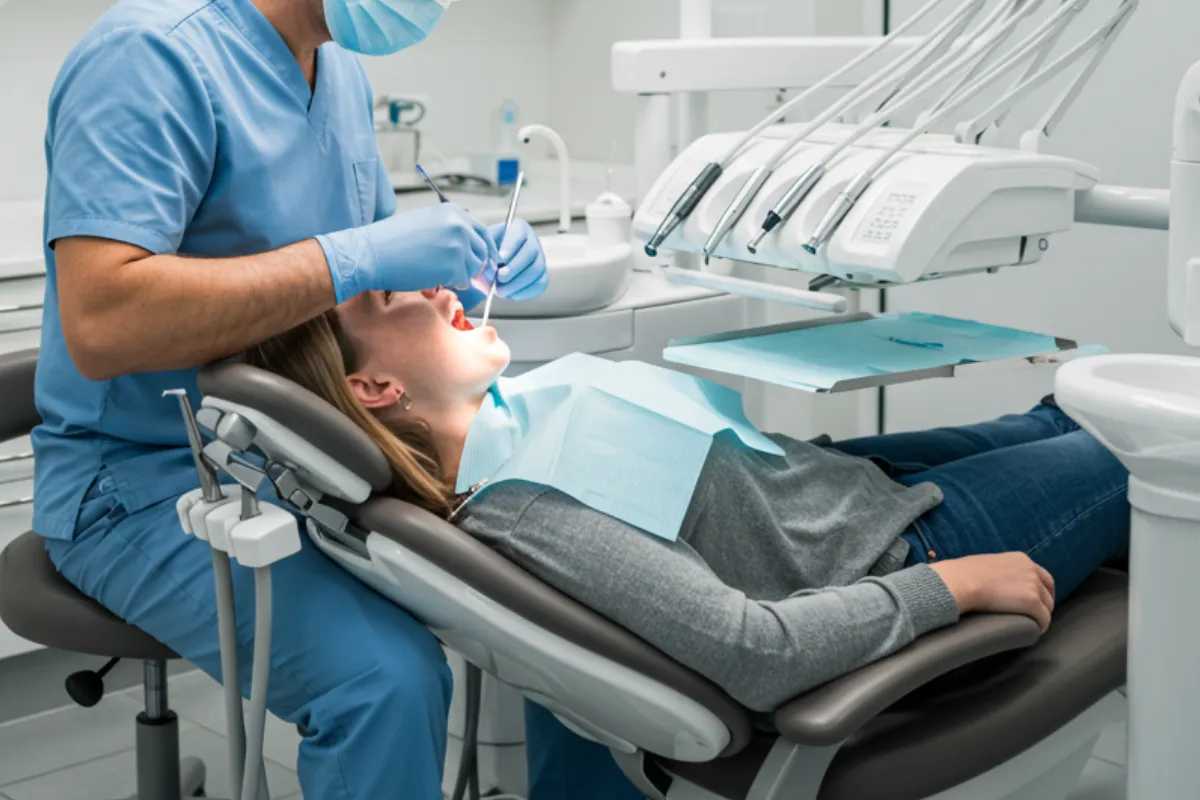
A dentist or dental hygienist will examine the gums, measure the space between the gums and teeth, check for bleeding, and look for tartar buildup. Dental X-rays may be used to assess bone levels around the teeth.
Those measurements are important. Small spaces around teeth can be healthy, while deeper pockets may indicate periodontitis. The team will also look at brushing patterns, recession, tooth mobility, bite forces, fillings that trap plaque, and areas that are difficult for you to clean.
This is not meant to be a lecture. It should be a practical conversation about what is happening in your mouth and what care is realistic for your routine.
Early gingivitis may improve with a professional cleaning and more targeted brushing and flossing. Periodontitis often needs scaling and root planing, sometimes called deep cleaning. This treatment removes bacterial deposits below the gumline. Ongoing periodontal maintenance appointments may then be recommended to keep the disease stable.
If gum disease has contributed to tooth loss, restorative dentistry may include options such as bridges, dentures, or dental implants. Implants can be a good option for some patients, but gum and bone health must be evaluated carefully first. An implant still needs healthy surrounding tissue and regular cleaning. It is not immune to inflammatory disease.
A daily routine that protects your gums
No routine is perfect every day. The goal is consistency, not a flawless performance in front of the bathroom mirror.
Brush twice daily for about two minutes with a soft-bristled toothbrush and fluoride toothpaste. Angle the bristles gently toward the gumline, using small motions rather than scrubbing hard. Brushing harder does not remove more plaque. It can irritate the gums and wear down exposed root surfaces.
Clean between your teeth once a day. Floss works well for many people, while interdental brushes may be easier and more effective for larger spaces, bridges, braces, or certain gum conditions. Ask your dental professional to show you the technique. A tool only helps if it reaches the right places.
A few habits can make the routine easier:
Keep floss or interdental brushes somewhere visible, such as beside your toothbrush or near where you watch television.
Replace worn toothbrushes or electric brush heads regularly, usually about every three months.
Drink water throughout the day, especially if you experience dry mouth.
Limit frequent sugary snacks and drinks, which feed cavity-causing bacteria and can complicate overall oral health.
Attend regular dental visits, even when nothing hurts.
Sugar-free gum may be helpful after meals when brushing is not practical. Chewing stimulates saliva, which helps wash away food debris and neutralize acids. Gum containing xylitol may provide added cavity-prevention benefits for some people. This guide on how sugar-free gum with xylitol may help prevent cavities explains how saliva and xylitol can support enamel. It is a useful extra habit, though it cannot replace brushing, cleaning between teeth, or professional dental care.
When to make an appointment
Book a dental visit if your gums bleed repeatedly, look swollen, feel sore, or seem to be receding. Do the same if you have persistent bad breath, pus around the gums, loose teeth, changes in your bite, or sensitivity near the gumline.
Seek urgent dental care for facial swelling, fever, severe pain, trouble swallowing, or trouble breathing. These can be signs of an infection that needs prompt treatment.
For families in North Vancouver, Vancouver, and West Vancouver, routine appointments give children, teens, adults, and older family members a chance to catch problems before they become painful or expensive. People with special needs may benefit from a care plan adapted to sensory preferences, mobility needs, communication style, medical history, and comfort.
Gum disease is common, but it is not something to shrug off. The earlier it is identified, the more options there are to protect the gums, bone, and teeth you already have.