Now Welcoming New Patients

A Healthier Mouth Starts With the Right Oral Hygiene Tools

A toothbrush does a lot of useful work, but it cannot reach every surface in your mouth. The tight spaces between teeth, the edges of dental restorations, and the uneven surface of your tongue need different approaches. That is why a good home dental care routine often includes more than brushing.
The goal is not to fill your bathroom counter with products. It is to choose tools that fit your mouth, your abilities, and your daily life. Someone with braces may need a different routine than a young child, while a person with limited hand mobility may find certain tools much easier to use.
For individuals and families in North Vancouver, the most useful starting point is the same: understand what each tool does, use it gently and consistently, and ask your dentist or dental hygienist to help with areas you find difficult to clean.
What Your Oral Hygiene Routine Is Trying to Remove
Dental plaque is a sticky film of bacteria that continually forms on teeth. Some of these bacteria use sugars from food and drinks to produce acids that can damage enamel. Plaque along the gumline can also trigger inflammation, which may cause redness, swelling, or bleeding.
When plaque hardens into tartar, brushing and flossing cannot remove it. Professional cleaning is needed.
Home care helps interrupt that process. Toothbrushes and interdental tools physically disturb plaque, while fluoride toothpaste helps protect enamel and repair early mineral loss. Some mouth rinses have a supporting role, but no rinse can replace thorough cleaning.
It is also worth clarifying what “strengthening gums” means. Healthy gums do not need a vigorous workout. They need effective, gentle plaque removal. Scrubbing harder or forcing tools between teeth can injure the tissue rather than improve it.
Toothbrushes: The Foundation of Daily Care
Choose soft bristles and a comfortable fit
For most people, a soft-bristled toothbrush is the right choice. A smaller head can make it easier to reach back teeth and maneuver around crowded areas.
Manual and powered toothbrushes can both clean effectively with good technique. Powered brushes may make brushing easier for people who struggle with hand movements or tend to rush. Some have timers and pressure sensors, which can help if you brush too briefly or press too hard.
The best brush is one you can use comfortably and thoroughly. An expensive handle does not compensate for repeatedly missing the same back molars.
Brush gently, twice a day
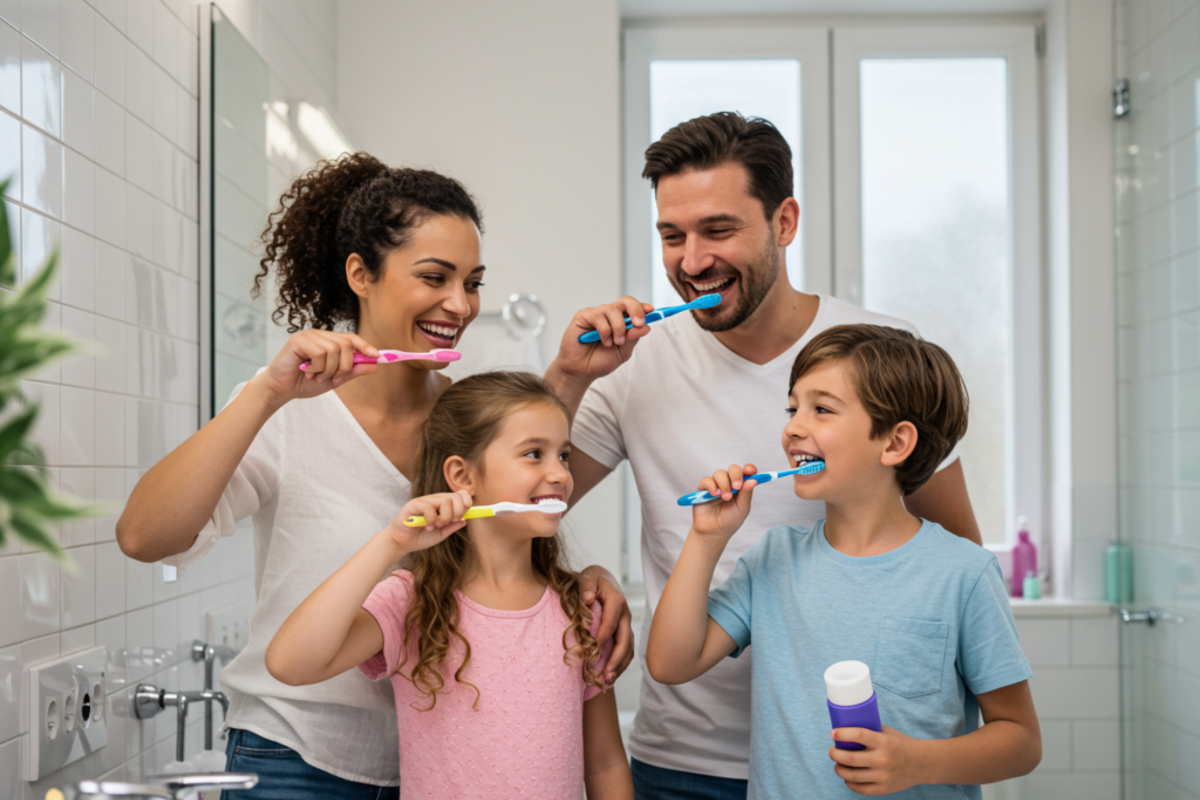
Brush for about two minutes, twice daily, with fluoride toothpaste. Position the bristles toward the gumline at roughly a 45-degree angle and use gentle, controlled movements. Clean the outer, inner, and chewing surfaces of every tooth.
If you use a powered brush, follow its instructions. Many work best when you guide the head slowly along each surface rather than scrub.
After brushing, spit out excess toothpaste rather than rinsing immediately with water. This leaves more fluoride in contact with your teeth. Replace your brush or brush head about every three to four months, or sooner if the bristles become frayed.
Persistent fraying can also be a clue that you are using too much pressure.
Floss: Cleaning Where Teeth Touch
Toothbrush bristles cannot reliably clean the tight contact areas between neighboring teeth. Floss is useful here because it can pass through the contact and follow the curved surface of each tooth.
The technique matters more than the flavor or packaging:
Guide the floss gently between two teeth without snapping it into the gums.
Curve it into a C shape against one tooth.
Move it carefully up and down, reaching slightly below the gumline without forcing it.
Repeat against the neighboring tooth, then continue around your mouth, including behind the last molars.
Aim to clean between your teeth once a day. Whether you do it in the morning or evening matters less than doing it consistently.
Floss holders can help people who have difficulty wrapping floss around their fingers. With braces, bridges, or certain dental restorations, a floss threader or specialized floss may be needed to reach underneath wires or replacement teeth.
If your gums bleed when you begin cleaning between your teeth, inflammation may be the reason. Use a gentle technique rather than abandoning the area. Bleeding that persists, worsens, or occurs without cleaning deserves a dental assessment.
Water Flossers: A Practical Option for Hard-to-Reach Areas
A water flosser directs a pulsing stream of water along the gumline and between teeth. Many people find it easier to manage than string floss, particularly around braces, fixed bridges, or dental implants.
Water flossers can help reduce gum inflammation and bleeding when used regularly. They may also be useful for people with arthritis, reduced dexterity, or difficulty tolerating traditional floss. Still, washing away visible food is not the same as cleaning every plaque-covered surface. The most suitable interdental method depends on your mouth and how well you can use it.
For a closer comparison of the options, this guide to water flossers versus traditional floss explores the differences and practical considerations.
Start with a low pressure setting and lukewarm water. Lean over the sink, keep your lips partly closed to limit splashing, and guide the tip along the gumline. Pause briefly between teeth and follow the manufacturer's directions.
If you have recently had oral surgery, do not direct a water flosser at the surgical site unless your treating clinician has said it is safe. Healing tissues need specific care, and your usual routine may need a temporary adjustment.
Interdental Brushes: Helpful When There Is Room
Interdental brushes are small brushes designed to clean spaces between teeth. They are especially useful where there are open gaps, gum recession, orthodontic appliances, or restorations that are difficult to reach.
Unlike floss, an interdental brush needs enough space to enter without force. A suitable brush should fit snugly enough for the bristles to contact the tooth surfaces, but the wire should not scrape against teeth or restorations.
You may need more than one size for different parts of your mouth. That is normal.
Guide the brush gently through the space and move it back and forth according to the product instructions. Rinse it during use, and replace it when the bristles are worn or the wire becomes bent.
For people with dental implants, tool selection deserves individual advice. A dentist or dental hygienist can recommend an appropriate size and design for cleaning around the implant restoration without damaging surrounding tissues.
Do not force an interdental brush through a tight contact. Floss may be the better choice there.
Tongue Scrapers: An Optional Tool for Tongue Coating
Your tongue has an uneven surface that can collect bacteria, food debris, and shed cells. This coating can contribute to bad breath.
A tongue scraper can remove some of that material. It is an optional addition to your routine, not a treatment for tooth decay or gum disease. A toothbrush can also gently clean the tongue, although some people prefer the feel of a scraper.
Place the scraper as far back as is comfortable, then draw it forward with light pressure. Rinse it between passes. A few gentle passes are enough; the aim is not to scrape the tongue completely bare.
Stop if you notice pain or bleeding. Pressing harder will not solve persistent odor.
Bad breath that continues despite regular cleaning may have another cause, such as gum disease, dry mouth, or a dental infection. A persistent coating, sore area, or unusual patch should also be checked rather than repeatedly scraped.
Mouth Rinses: Choose for a Specific Purpose
The mouthwash aisle can be confusing because products that look similar may do very different things.
A cosmetic rinse may temporarily freshen breath. An antimicrobial rinse contains ingredients intended to reduce certain bacteria and may help control plaque or gingivitis. A fluoride rinse helps prevent cavities but is not necessarily antimicrobial.
Choose based on a specific need rather than the strongest flavor or most noticeable burning sensation. A burning feeling is not proof that a rinse is working better.
Antimicrobial rinses have limits
Some over-the-counter antimicrobial rinses can support brushing and interdental cleaning. They do not remove tartar or reliably clean away an established plaque film on their own.
Prescription chlorhexidine rinses may be recommended for particular situations, usually for a defined period. They can cause staining, taste changes, and increased tartar buildup, so use them only as directed.
Alcohol-free products may be more comfortable for people with dry mouth or sensitive tissues. However, alcohol-free does not automatically mean antimicrobial or suitable for everyone. Read the label.
Timing and age matter
Using mouthwash immediately after brushing can wash away the concentrated fluoride left by toothpaste. Unless your dental professional advises otherwise, consider using a recommended rinse at another time of day.
Follow any instructions about avoiding food or drink afterward, and never swallow mouth rinse. Most rinses are not appropriate for children younger than six unless specifically directed by a dental professional. Older children also need to be able to spit reliably.
Adapting the Routine for Your Household
Children need hands-on help
For children younger than three, use a smear of fluoride toothpaste about the size of a grain of rice. For ages three to six, use a pea-sized amount and encourage spitting.
Adults should help with brushing until a child has the coordination to clean thoroughly, often around age seven or eight and sometimes longer. Begin cleaning between teeth when neighboring teeth touch.
A pediatric dentistry visit is a good opportunity to ask for a demonstration. It is much easier to copy a technique after seeing it in your child's own mouth.
Comfort and accessibility count
For someone with sensory sensitivities, a strongly flavored toothpaste, noisy powered brush, or forceful water stream may make oral care harder. A mild-flavored fluoride toothpaste, manual brush, or gradual introduction to a new tool may be more manageable.
Larger handles and floss holders can help people with limited grip. Caregivers may also need advice about positioning, visibility, and safe assistance.
There is no benefit in prescribing a complicated routine that someone cannot comfortably follow. Start with manageable steps, then adjust with professional support.
Build a Routine You Can Maintain
You probably do not need every tool described here. Most routines begin with twice-daily brushing using fluoride toothpaste and daily cleaning between teeth with a suitable method. Tongue cleaning or a specific rinse can be added when there is a reason.
Try introducing one change at a time. If floss is awkward, ask someone to check your technique or recommend an alternative. If an interdental brush hurts, have the fit assessed rather than pushing through.
Home care also has limits. Book a dental assessment for persistent bleeding, swelling, pain, loose teeth, or bad breath that does not improve. Regular checkups and professional cleaning remain important even when your teeth feel fine.
The most effective routine is not the one with the most products. It is the one that reaches the areas your mouth needs cleaned, protects your teeth with fluoride, and is practical enough to repeat tomorrow.