Now Welcoming New Patients

Baby Teething Explained: When to Seek Dental Care in North Vancouver

If you have a teething baby at home, life can feel oddly dramatic. One day your child is cheerful, the next they are chewing a sleeve, drooling through three bibs, and waking up at 2 a.m. furious with the world. Teething gets blamed for a lot, sometimes fairly, sometimes not.
The hard part is this: teething is normal, but not every rough day is caused by new teeth. Knowing the difference can save a lot of stress, and it can also help you spot problems that deserve a closer look from a dentist or doctor.
Here’s what teething usually looks like, what you can do at home, and when it makes sense to book a dental care visit.
What teething actually is
Teething is the process of primary teeth, often called baby teeth, moving through the gums and appearing in the mouth. Most babies start teething sometime between 4 and 7 months, but there is a wide range of normal. Some get a first tooth at 3 months. Others are well past their first birthday before anything shows up. That can feel unsettling for parents, but variation is common.
Most children end up with 20 baby teeth in total. They usually come in over the first two to three years of life. The order is often:
- Lower front teeth
- Upper front teeth
- Teeth beside the front teeth
- First molars
- Canines
- Second molars
That said, babies do not read charts. A different order is often completely fine.
Baby teeth matter more than people sometimes think. They help with chewing, speech development, and guiding adult teeth into place later on. Good early oral habits are part of pediatric dentistry for a reason. They really do affect long term dental care.
What is normal during teething
A lot of teething symptoms are annoying but expected. A baby with a tooth about to come through may have:
- More drooling than usual
- A strong urge to chew on fingers, toys, or anything else within reach
- Mild gum swelling or tenderness
- Fussiness, especially in the evening
- Brief sleep disruption
- Mild changes in feeding, especially if sucking seems to irritate sore gums
- Face rubbing or ear rubbing on the same side as the erupting tooth
You may also notice a tiny white bump under the gum before the tooth appears. Sometimes the gum looks slightly bluish where a tooth is coming in. That can happen with an eruption cyst or small blood blister over the tooth. It often looks worse than it is, which is a recurring theme in parenting.
A slight rise in temperature can happen, but true fever is a different story. Teething may make a baby a little warm. It should not cause a high fever.
What teething does not usually cause
This is where things get muddled. Teething tends to get blamed for every miserable baby moment, and I understand why. It is a convenient explanation when your child is fussy and everyone is tired. But some symptoms should not be written off as “just teething.”
Teething does not usually cause:
- A fever of 38 C or higher
- Vomiting
- Significant diarrhea
- Heavy congestion or a bad cough
- A widespread rash on the body
- Extreme lethargy
- Refusing all food and drink for an extended period
Mild drool rash around the mouth or chin is common because of constant moisture. A full body rash is not a teething symptom. Likewise, a baby who has loose stools once or twice because they are swallowing extra drool is different from ongoing diarrhea.
If your child has those bigger symptoms, think beyond teeth. Babies get viral infections. They get ear infections. They put everything in their mouths. Sometimes timing makes it look like teething, but it is really an illness that needs medical attention.
How to soothe a teething baby safely
Most teething discomfort can be managed at home. The goal is simple: reduce gum irritation and help your baby settle.
A clean finger can work surprisingly well. If your baby will tolerate it, gently rub the gums with washed hands. The pressure often helps.
Cold also helps. Try a chilled teething ring or a cool, damp washcloth. Cool is enough. Frozen teething toys can be too hard on sore gums. Some babies love the texture of a washcloth and will chew on it quite happily for a while.
If your baby has started solids, cold foods like plain yogurt or chilled fruit puree can help, depending on age and feeding stage.
Pain medicine can be useful when a baby is very uncomfortable, especially at bedtime. Use only medications appropriate for your child’s age and weight, and follow guidance from your pediatrician, dentist, or pharmacist. That part matters. Dosing mistakes are easy when everyone is tired.
A few things are best avoided. Topical numbing gels with benzocaine are generally not recommended for babies. Homeopathic teething tablets have raised safety concerns in the past. Teething necklaces, including amber necklaces, are a hard no for most dental and medical professionals because of choking and strangulation risk. They are one of those products that sound gentle and natural until you think about a baby sleeping in a necklace.
Teething and feeding, what to expect
Some babies nurse or bottle feed more when teething because sucking is comforting. Others feed less because their gums hurt. Both patterns can happen.
You might notice:
- Pulling on and off the breast or bottle
- Preferring cold foods
- Wanting shorter, more frequent feeds
- Biting during breastfeeding once teeth appear
A temporary dip in appetite is common. Dehydration is not. If your baby is producing fewer wet diapers, seems unusually sleepy, or is refusing fluids, it is time to call a healthcare professional.
If breastfeeding gets painful after teeth arrive, it usually helps to break suction calmly and consistently when biting happens. Babies are quick learners when the response is clear and boring.
When to see a dentist
A lot of teething can be handled at home, but there are times when a dental exam is worth it. Some situations are not emergencies, but they should not be ignored either.
You should consider seeing a dentist if your baby has persistent gum swelling, bleeding, or obvious pain that does not improve with usual soothing measures. The same goes for a tooth that looks discolored when it erupts, enamel that appears pitted or chalky, or a tooth coming in at a very unusual angle that worries you.
Delayed eruption can also be worth checking. A baby with no teeth by around 18 months should have a dental evaluation. Often the answer is simply normal variation, but sometimes delayed eruption is linked to genetics, crowding, developmental differences, or uncommon medical issues. It is better to ask than to sit with uncertainty.
Trauma is another reason to book promptly. Babies learning to crawl and walk fall a lot. If a tooth is chipped, pushed out of place, looks darker after a fall, or there is bleeding that does not stop, a dentist should assess it. Mouth injuries can affect baby teeth and, in some cases, the adult teeth developing underneath.
Here are some clear reasons to book a dental visit:
- No teeth by 18 months
- Gums that look very swollen, infected, or are draining pus
- White, brown, or black spots on new teeth
- Teeth damaged after a fall or bump
- Ongoing mouth pain, feeding trouble, or bleeding
- Questions about brushing, fluoride, or cavity prevention
A family dentist may handle infants and young children, or they may recommend a provider focused on pediatric dentistry. If your household already sees one clinic for general dental care, restorative dentistry, dental implants, oral surgery, endodontics, or teeth whitening, ask whether they also see babies or whether they prefer to refer infants to a pediatric provider. There is no single right setup. What matters is finding someone comfortable examining very young children.
When to call a doctor instead
Some symptoms point more to illness than teething. Call your pediatrician or seek medical care if your baby has a high fever, vomiting, significant diarrhea, trouble breathing, dehydration, or seems much less responsive than usual.
A mouth problem can also overlap with a medical problem. For example, white patches in the mouth may be thrush, not teeth. Painful sores could be a viral infection. Swelling of the face or jaw is never something to brush off. If you are stuck choosing between dentist or doctor, start wherever you can be seen fastest, especially if your child seems unwell.
Your baby’s first dental visit matters
There is a guideline many parents hear and then promptly forget because life is busy: a child should see a dentist by age 1, or within 6 months of the first tooth coming in.
That sounds early until you think about how quickly habits form. By the first birthday, many children already have several teeth, exposure to snacks or juice, and bedtime routines that can affect cavity risk. Early visits are often short and simple. They are less about treatment and more about prevention, education, and getting your child used to the setting before there is a problem.
At that first visit, the dentist may check:
- How the teeth are erupting
- Signs of early decay
- Gum health
- Bite development
- Oral habits like pacifier use or thumb sucking
- Cleaning routines and fluoride use
For families in North Vancouver, that early relationship can be helpful later. Once your child knows the dental office is a normal place, future appointments often go more smoothly.
How to care for new baby teeth at home
This part is easy to overlook because baby teeth are small and cute and feel temporary. They still need real care.
Before teeth erupt, you can wipe the gums with a clean, damp cloth once a day. It is not mandatory in every household, but it helps build the habit.
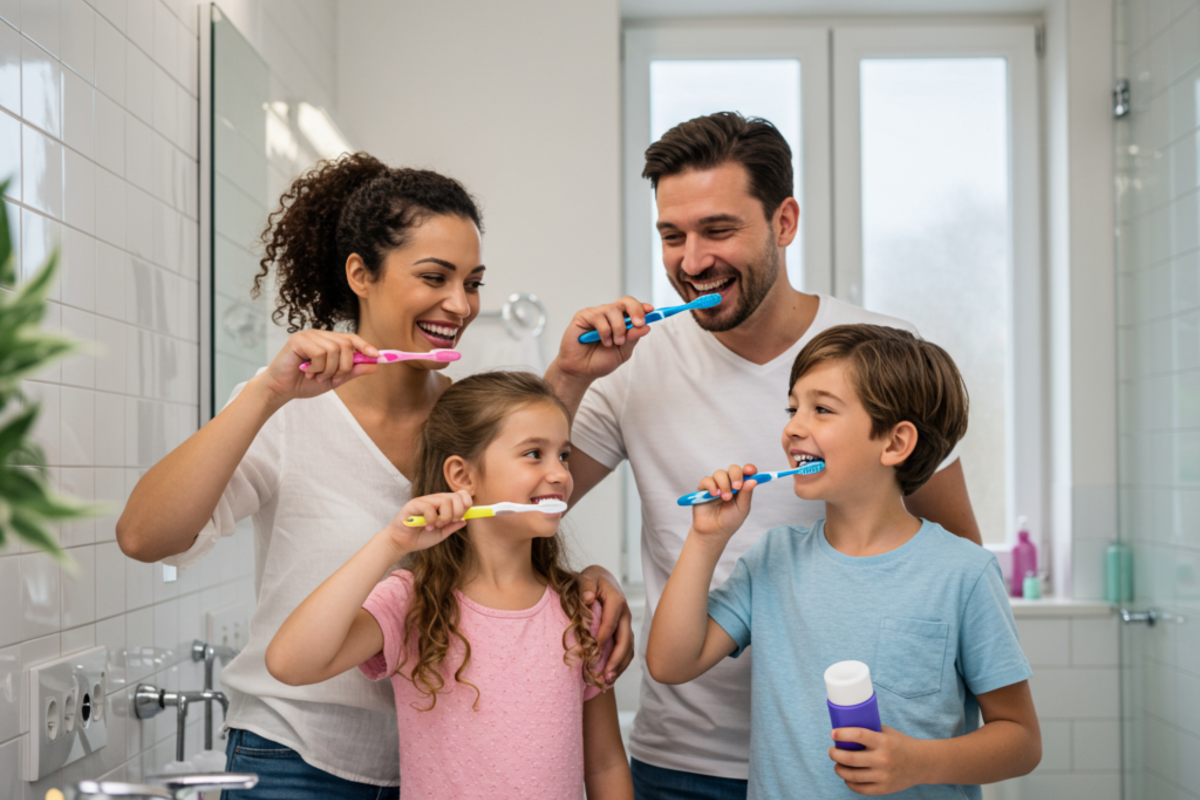
Once the first tooth appears, brush twice a day with a soft infant toothbrush. Use a smear of fluoride toothpaste about the size of a grain of rice for children under 3. That amount is tiny, and yes, fluoride is still recommended because it helps prevent cavities.
A few practical habits make a big difference:
- Avoid putting a baby to bed with a bottle containing milk, formula, or juice
- Offer water between meals once your child is old enough
- Limit frequent sugary snacks and drinks
- Transition away from prolonged bottle use as your child grows
- Help with brushing well past toddlerhood, because young children do not have the coordination to do a thorough job
Early childhood cavities can develop fast, especially on upper front teeth. I wish that sounded dramatic. It is actually pretty ordinary. A child can go from “those spots are probably nothing” to needing significant treatment faster than most parents expect. In severe cases, very young children sometimes end up needing restorative dentistry or even oral surgery under sedation or general anesthesia because decay progressed so far. That is exactly the sort of situation prevention is meant to avoid.
Common teething myths that cause confusion
Teething attracts folklore. Some of it is harmless. Some of it leads parents in the wrong direction.
One myth is that every baby becomes miserable while teething. Some do. Some barely notice. Temperament plays a role, and so does the location of the tooth. Molars usually get more attention than tiny front teeth.
Another myth is that fever and diarrhea are normal parts of teething. They are not typical. If those symptoms are significant, look for another cause.
A third myth is that baby teeth do not matter because they fall out anyway. They do matter. Healthy baby teeth support speech, nutrition, comfort, and the spacing of permanent teeth.
Then there is the idea that any remedy sold for teething must be safe. I would not assume that. Babies are small, products are unevenly regulated, and “natural” is not a safety guarantee.
The bottom line
Teething is messy, loud, and usually temporary. Some drool, gum rubbing, fussiness, and disrupted sleep are part of the package. High fever, vomiting, severe diarrhea, major swelling, and persistent feeding refusal are not things to dismiss as teething.
If your baby seems uncomfortable but otherwise well, simple home care is often enough. If something feels off, trust that instinct and book a visit with a dentist or doctor. Parents are not expected to diagnose every symptom perfectly. You are allowed to ask.
The first years of dental care are less about fixing problems and more about preventing them. A baby’s first tooth is a small milestone, but it opens the door to habits that can protect their mouth for years. That is worth paying attention to, even when you are running on very little sleep.