Now Welcoming New Patients

Why Is One Tooth Darker Than the Others? Causes, Clues, and What Can Fix It

You catch your reflection, smile, and there it is. One tooth looks darker than the rest.
That can be unsettling. Most people jump straight to one of two thoughts: “I must need teeth whitening,” or “Something is seriously wrong.” The truth usually sits somewhere in the middle. A single dark tooth often points to a local issue affecting that tooth, not a problem with your whole mouth. Sometimes the cause is harmless surface stain. Sometimes it is a sign the inside of the tooth has changed after trauma, decay, or a failing filling.
Either way, it is worth getting checked.
The good news is that a darker tooth can often be improved, and in many cases fully treated. The right fix depends on why the color changed in the first place. Whitening might help. In other cases, whitening does almost nothing, and you need restorative dentistry or endodontics instead.
A dark tooth is usually a clue, not a diagnosis
Teeth do not all change color for the same reason. A front tooth that turns gray after getting hit with a hockey stick is a different situation than a molar that looks brown because of decay. From a distance, both may just look “darker.”
That is why mirror checks and internet photos only get you so far.
A dentist will usually want to know a few basic things first:
When did you first notice the color change?
Is the tooth painful, sensitive, loose, or chipped?
Did you ever injure that tooth, even years ago?
Has it had a filling, crown, or root canal before?
Is the color on the surface, or does it seem to come from inside the tooth?
Those details matter more than people expect. A tooth that changed slowly over time often suggests something different than a tooth that darkened within days after an injury.
What the color can sometimes tell you
Color alone cannot confirm the cause, but it can offer hints.
A yellow or brown tooth may have surface staining, enamel wear, or decay. A gray tooth often makes dentists think about trauma or loss of vitality, which means the nerve and blood supply inside the tooth may no longer be healthy. A tooth with a pinkish tone is less common, and it can point to internal resorption, a condition where the tooth structure starts breaking down from the inside. A dark shadow near a filling or along the gumline may come from leakage, decay, or even the show-through effect of old metal dental work.
I would not put too much faith in self-diagnosing by shade alone, but these patterns are useful.
Common causes of one tooth looking darker
Surface stain on a single tooth
This is the simplest explanation, and sometimes the one people overlook. A single tooth can pick up more stain than its neighbors if it sits slightly out of line, has a rough patch of enamel, or collects more plaque and tartar.
Coffee, tea, red wine, tobacco, and even some mouth rinses can contribute. If one tooth has a tiny chip, a worn spot, or a rough old filling, stain may cling there more easily.
In this case, the discoloration is usually external. A professional cleaning and polishing may make a big difference. Teeth whitening can help too, but it is smart to start with an exam first. What looks like a stain is not always a stain.
A past injury to the tooth
This is one of the most common causes of a single front tooth turning darker.
A tooth can be injured in a fall, sports accident, bike crash, or even a minor bump you barely remember. The odd part is that the color change may not happen right away. A tooth can darken months or years after trauma.
Why? Because the injury can damage the pulp inside the tooth. That pulp contains nerves and blood vessels. If the blood supply is disrupted, the tooth may gradually look gray, brown, or dull compared with the teeth beside it.
Sometimes the tooth is dead. Sometimes it is still alive but has gone through internal changes. Either way, a trauma history matters.
This is also common in children and teens. A child who bumps a front tooth may seem fine at first, then later one baby tooth or permanent tooth starts to look darker. That does not always mean pain or infection, but it should be evaluated, especially in a pediatric dentistry setting if the patient is young.
A tooth that needs root canal treatment
People often assume a tooth only needs root canal treatment if it hurts badly. I wish that were always true, because it would make things easier to spot. In reality, some unhealthy teeth darken with little pain.
If the pulp becomes inflamed or infected, the inside of the tooth can break down and alter the color from within. This can happen after trauma, deep decay, cracks, or repeated dental work.
Signs that can go along with this include:
lingering sensitivity to hot or cold
pain when biting
a gum pimple near the tooth
swelling
a bad taste or drainage
a tooth that feels “different” even without sharp pain
If the nerve is no longer healthy, endodontics may be the right treatment. In plain language, that often means root canal therapy. Once the unhealthy tissue is removed and the tooth is sealed, the color issue can be addressed separately if needed.
Tooth decay
Decay does not always show up as a dramatic hole. Sometimes it starts between teeth or near the gumline and creates a brown, shadowy, or dark patch. On back teeth, a darker area may also reflect weakened enamel under the surface.
If decay is the cause, whitening products will not solve it. The decayed part needs to be removed, and the tooth restored. Depending on the size of the problem, that may mean a filling, an inlay, or a crown.
An old filling or crown
Restorations age. Fillings can leak, stain, or leave the tooth looking darker around the edges. Old silver amalgam fillings can create a grayish cast that shows through the tooth structure. Crowns, especially older ones, may no longer match surrounding teeth as gums and enamel change over time.
This is more common in molars and premolars, but front teeth can be affected too.
Sometimes the restoration is still doing its job and only the appearance has changed. Other times the dark look is a warning sign that the margin is failing or decay has started underneath.
Thin enamel, wear, or enamel defects
Not every dark tooth is unhealthy on the inside. Some teeth simply have thinner enamel, which lets more of the yellow dentin underneath show through. Grinding, acidic wear, developmental enamel defects, and old chips can make one tooth look darker or more opaque than the rest.
This is a cosmetic issue as much as a health issue, though worn teeth also deserve attention because the underlying structure becomes more vulnerable over time.
Internal resorption and other less common causes
This is the category most people have never heard of, and that is fair. Internal resorption is not common, but it matters because it can change a tooth’s color in a very distinctive way. Some teeth develop a pink or dark internal glow because the inner structure is being resorbed.
This condition needs prompt care. It is usually diagnosed with imaging and exam findings, not just appearance.
There are other less common causes too, including calcific changes after trauma, certain medications used during tooth development, and defects from earlier injury to the tooth as it formed.
How a dentist figures out the real cause
A darker tooth often looks simple from the outside and complicated once you start asking the right questions.
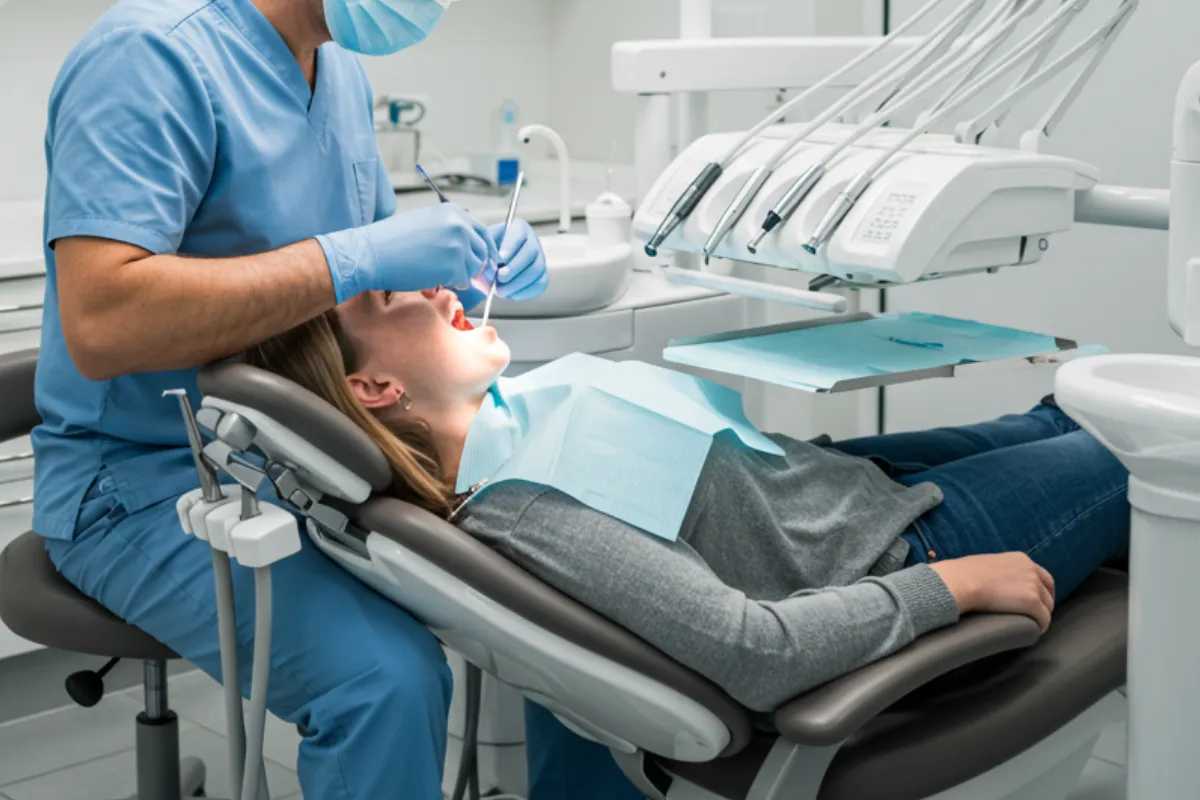
The exam usually includes a visual check, x-rays, and sometimes tests of how the tooth responds to temperature or gentle stimulation. Photos can help track changes over time. If there has been trauma, the dentist may also compare mobility, bite, and gum health.
This is one reason an in-person visit matters. A good exam can separate a stain from a nerve problem, and a cosmetic concern from something that needs treatment first. If you are looking for compassionate family dental care in North Vancouver, this is the kind of issue that is best assessed in the chair, not guessed at from a bathroom mirror.
The right fix depends on the cause
This is the part most people care about most. Can it be fixed?
Often, yes. But “fix” can mean very different things.
1. Cleaning and polishing
If the discoloration is on the surface, a professional cleaning may be enough. This is the easiest outcome and the one everyone hopes for.
2. Teeth whitening
Teeth whitening works best for external stains and generalized yellowing. It is less reliable for a single tooth that has darkened because the nerve inside is damaged.
This is where people get frustrated. They whiten all their teeth, the surrounding teeth get brighter, and the one dark tooth stands out even more.
For a tooth that has had root canal treatment, internal bleaching may be an option. That is different from the whitening strips sold at the pharmacy. The whitening material is placed inside the treated tooth by a dentist, and it can be very effective in carefully selected cases.
3. Bonding
Dental bonding can cover discoloration and improve shape at the same time. It works well for small to moderate cosmetic issues, especially on front teeth. It is a conservative option, though it may stain or wear over time.
4. Veneers or crowns
If the tooth has more severe discoloration, structural damage, or a large old filling, a veneer or crown may make more sense. Veneers are often used on front teeth when the goal is cosmetic improvement with less coverage than a crown. Crowns cover the whole visible part of the tooth and are often chosen when strength matters too.
5. Root canal treatment
If the tooth is infected or the pulp is no longer healthy, the first step is treating that disease. Cosmetic correction comes after. Root canal treatment can save many teeth that would otherwise keep hurting, darkening, or eventually need extraction.
6. Replacing old restorations
If a leaking filling or aging crown is causing the dark appearance, replacing it may solve both the look and the underlying problem.
7. Extraction and replacement
This is usually the last option, not the first. If a tooth is badly damaged, cracked below the gumline, or not restorable, extraction may be necessary. After that, replacement options can include a bridge or one of the more common long-term choices, dental implants. In some cases, oral surgery is part of that plan.
People sometimes assume a dark tooth automatically means it will be lost. That is often not true. Many dark teeth are very treatable.
Can you treat a dark tooth at home?
Sometimes. Carefully. With realistic expectations.
If the problem is mild surface stain, whitening toothpaste or over-the-counter whitening products may help a little. But home treatment has limits. It will not fix decay. It will not heal a damaged nerve. It will not repair a failing filling. And it can make the mismatch look worse if the neighboring teeth whiten faster than the dark one.
A few things are worth avoiding:
aggressive scrubbing with abrasive toothpaste
charcoal products that wear enamel
DIY acids or internet “hacks”
waiting months to see if pain starts
Teeth are not great at sending early warning signals. By the time pain appears, the problem is often bigger.
A special note for children
Parents notice this a lot after a child bumps a front tooth. A baby tooth may turn gray, yellow, or brown after trauma. Sometimes it settles without pain. Sometimes it develops an abscess. Because baby teeth sit close to the developing adult teeth underneath, it is worth having them checked.
Permanent teeth in children and teens deserve even more attention after injury. A darkening permanent tooth may still be saved, but timing matters. Sports guards, quick evaluations after accidents, and follow-up checks can make a real difference.
When to book an appointment soon
A single dark tooth is rarely something to panic over, but there are situations that should move faster than “I’ll deal with it later.”
Book promptly if you have:
pain that lingers or wakes you up
swelling in the gums or face
a pimple-like bump on the gum
recent trauma to the tooth
a loose, cracked, or chipped tooth
a pink, gray, or rapidly changing color
bad taste or drainage near the tooth
Even without pain, a tooth that keeps getting darker deserves attention.
The bottom line
One tooth darker than the others usually means that one tooth has its own story. Maybe it picked up stain. Maybe an old injury finally showed itself. Maybe there is decay, a failing restoration, or a nerve problem that needs treatment.
The fix can be simple. It can also involve restorative dentistry, endodontics, or cosmetic treatment. That is why the first step is not guessing which whitening product to buy. It is finding out why the color changed.
A darker tooth does not always mean a serious problem, but it does mean your tooth is trying to tell you something. It is worth listening.