Now Welcoming New Patients

How to Brush Properly: What Kids Need, What Adults Need, and Why It Changes

Brushing looks easy. Put toothpaste on a brush, move it around, rinse, done.
In real life, it is a little messier than that.
A toddler chewing on a toothbrush is not brushing. A teen racing through 20 seconds before school is not really brushing either. And plenty of adults, even careful ones, scrub too hard and slowly wear down their gums. The basics stay the same through life, but the reason we brush, the way we brush, and the kind of help we need all change with age.
That matters more than people think. Good brushing lowers the risk of cavities, gum disease, bad breath, and plaque buildup. It also helps protect fillings, crowns, braces, and other dental work. If you ever need restorative dentistry, endodontics, oral surgery, or dental implants, daily brushing becomes even more important, not less.
Here’s how to think about brushing at different ages, and how to do it well.
Why brushing changes as we grow
Children are still learning the skill itself. Their hands are smaller, their attention span is shorter, and they don’t always understand why brushing matters. They need coaching, routine, and supervision.
Adults usually know they should brush. The problem is technique, consistency, or changing oral health needs. Gums may recede. Teeth may become more sensitive. Plaque hardens into tartar if it is missed again and again. Old fillings, crowns, bridges, and implants need careful cleaning around the edges.
So the goal shifts.
For kids, brushing is mostly about habit-building and cavity prevention.
For adults, brushing is still about cavity prevention, but it is also about protecting the gums, cleaning thoroughly along the gumline, and maintaining any existing dental care.
Same toothbrush. Different job.
The brushing basics that apply to almost everyone
Before separating kids and adults, it helps to cover the universal basics.
Most people do best with:
brushing twice a day for two minutes
using a soft-bristled toothbrush
replacing the brush or brush head about every three months, or sooner if the bristles fray
using fluoride toothpaste
brushing all surfaces of every tooth, outer, inner, and chewing surfaces
cleaning the tongue gently
flossing or cleaning between teeth once a day
If you only remember one technique point, make it this: brush gently at the gumline. That’s where plaque loves to sit.
Harder is not better. I wish more people heard that early.
How kids should brush
Babies and toddlers need brushing before they can do it themselves
Oral care starts earlier than many parents expect. Once the first tooth appears, it should be cleaned every day. Before that, wiping the gums with a clean, damp cloth after feedings can help keep the mouth clean.
For children under age 3, use a tiny smear of fluoride toothpaste, about the size of a grain of rice. Use a small, soft toothbrush and brush very gently.
At this stage, the parent or caregiver does the brushing. A toddler may want to “help,” which is fine, but the grown-up still needs to finish the job.
The biggest challenge here is not technique. It is cooperation. Some days go smoothly. Some days feel like a negotiation with a tiny lawyer. That is normal.
A few things help:
brush at the same times every day
let the child watch you brush
sing a short song or use a timer
keep the language simple and calm
The habit matters as much as the mechanics.
Preschoolers can participate, but they still need close supervision
From ages 3 to 6, children can start learning the pattern, but they usually cannot brush well enough on their own. Use a pea-sized amount of fluoride toothpaste and supervise closely so they do not swallow too much.
A simple method works best:
Angle the brush gently toward the gums.
Use small circles on the front, back, and tops of the teeth.
Brush for two full minutes.
Encourage spitting out the toothpaste when finished.
Many families find it easier if the child brushes first, then the adult “checks and finishes.” That keeps the child involved without assuming they have the dexterity to do a complete job.
If you are wondering when children can brush alone, the honest answer is later than most people think. Many need help until around age 7 or 8, sometimes longer. A good rule is this: if they are still struggling to tie shoes neatly or write with control, they probably still need help with brushing too.
School-age children need coaching, not just reminders
Once children are older, it is tempting to step back. That is when brushing quality often drops.
Kids this age may brush quickly, skip the back teeth, or miss the gumline entirely. They are more independent, but they still benefit from occasional supervision and direct feedback.
This is also the age when cavity risk can climb. Snacks are frequent. Sports drinks and juice show up more often. Bedtimes get rushed.
Instead of asking, “Did you brush?” it often works better to ask, “Did you brush the back teeth and along the gums?” It turns brushing from a checkbox into a skill.
A dentist who works in pediatric dentistry can also help teach children what effective brushing feels like. Sometimes kids accept instructions from a professional more readily than from a parent. That may be unfair, but it is very real.
Teens need consistency, especially with braces
Teenagers usually know the routine, but consistency can be rough. Late nights, busy mornings, sports, and braces all get in the way.
Braces add another layer because plaque collects around brackets and wires. Brushing needs to be more deliberate, with extra attention above and below each bracket. Interdental brushes and floss threaders can help reach places a regular brush misses.
For teens without braces, the main issue is often speed. Two rushed swipes do not count as brushing.
For teens with braces, the issue is detail. The mouth simply has more plaque traps.
If a teen has frequent sensitivity, white spots near the brackets, or bleeding gums, it is a sign the technique needs work, not just the schedule.
How adults should brush
Adults need to protect teeth and gums at the same time
Adult brushing is less about learning the motion and more about doing it carefully enough, every day, for years.
The gumline becomes the main focus. Plaque that sits there can lead to gingivitis, then gum disease. And if you scrub too hard in the name of being “thorough,” you can irritate the gums and wear away enamel near the neck of the tooth.
That balance is the tricky part.
You want enough contact to remove plaque. You do not want the brushing itself to become a source of damage.
A gentle technique usually works best
For most adults, this approach is solid:
Place the toothbrush at a 45-degree angle toward the gumline.
Use short, gentle strokes or tiny circles.
Clean two or three teeth at a time before moving on.
Brush the outside surfaces, inside surfaces, and chewing surfaces.
Tilt the brush vertically to clean the inner side of the front teeth.
Finish by brushing the tongue lightly.
If you use an electric toothbrush, let the brush do the motion. Guide it tooth by tooth rather than scrubbing back and forth.
People are often surprised by how soft the pressure should be. If the bristles flatten against the teeth, that is usually too much force.
Adults often miss the same spots again and again
Back molars are common trouble areas. So are the inside surfaces of the lower front teeth, where tartar tends to build up, and the area right along the gums.
If your gums bleed when you brush, don’t assume you should stop brushing there. Mild bleeding is often a sign that plaque has been sitting at the gumline. Clean the area gently but thoroughly. If bleeding continues, a dentist should check for gum inflammation or other causes.
Persistent bad breath can point to the same issue. So can a fuzzy feeling on the teeth by the end of the day.
Those are small clues, but they matter.
Adults with dental work need a slightly different mindset
Natural teeth are not the only surfaces that need care. Many adults are brushing around old fillings, crowns, bridges, veneers, or implants.
That changes where plaque collects.
Fillings, crowns, and bridges
Brushing should focus on the edges where the restoration meets the natural tooth. That junction is where plaque and bacteria can settle. A crown cannot get a cavity, but the tooth underneath and around it still can.
People who have had restorative dentistry sometimes assume the repaired tooth is “fixed” and no longer vulnerable. I get why that happens. But repaired does not mean maintenance-free.
Dental implants
Dental implants do not decay like natural teeth, but the gums and bone around them still need protection. Plaque around an implant can irritate the surrounding tissue and lead to peri-implant problems.
The technique is similar to brushing natural teeth: gentle, thorough, and focused around the gumline. Soft bristles are especially important.
After endodontics or oral surgery
If you have recently had endodontics, such as a root canal, or oral surgery, follow the aftercare instructions you were given. Sometimes brushing near the area is modified for a short time. The goal is to keep the mouth clean without disturbing healing tissue.
Short-term changes are normal. Long-term neglect is not.
Kids and adults make different brushing mistakes
The mistakes are not identical, and that is useful to know.
Children often:
brush too briefly
miss back teeth
swallow toothpaste
need help longer than parents expect
treat brushing like playtime rather than cleaning time
Adults often:
brush too hard
rush through familiar areas and miss the gumline
ignore bleeding gums
keep old toothbrushes too long
assume existing dental work needs less attention
If I had to pick the most common mistake in each group, I’d say kids need more guidance than families think, and adults use more pressure than they should.
What about special situations?
Sensitive teeth
If brushing hurts, people tend to avoid the sore spots. That usually makes the problem worse. Use a soft brush, lukewarm water if cold hurts, and toothpaste made for sensitivity if your dentist recommends it. Sensitivity can come from gum recession, worn enamel, cavities, or recent teeth whitening, so it is worth checking the cause.
Dry mouth
Adults with dry mouth get cavities faster because saliva does less of its usual protective work. In that case, consistent brushing becomes even more important. A dentist may also suggest fluoride support or other dry-mouth strategies.
Children and adults with special needs
Some people need adapted routines because of sensory sensitivity, limited dexterity, or medical conditions. Smaller brush heads, electric toothbrushes, visual schedules, hand-over-hand guidance, and modified positioning can all help.
There is no single “right” setup if the standard approach does not work. The right setup is the one that allows safe, regular, effective cleaning.
Whitening products
People using whitening products sometimes brush more aggressively, hoping for a faster result. That does not work. It mostly irritates the gums and can worsen sensitivity. Teeth whitening can improve color, but it does not replace careful daily brushing.
When should brushing be paired with a dental visit?
Brushing is foundational, but it is not the whole story. A dentist should evaluate problems like:
bleeding gums that continue for more than a few days
persistent bad breath
tooth pain
white spots, brown spots, or visible holes in teeth
gum recession
loose teeth
swelling
brushing difficulty around braces, bridges, or implants
Routine checkups matter because plaque that hardens into tartar cannot be brushed away at home. Professional dental care fills the gap between daily effort and what only instruments and trained eyes can catch.
For families in North Vancouver, that means it helps to have a regular dentist who can track changes over time, especially for children moving through early brushing stages and adults managing restorations or gum issues.
A simple routine that works at home
If your household needs a reset, keep it simple.
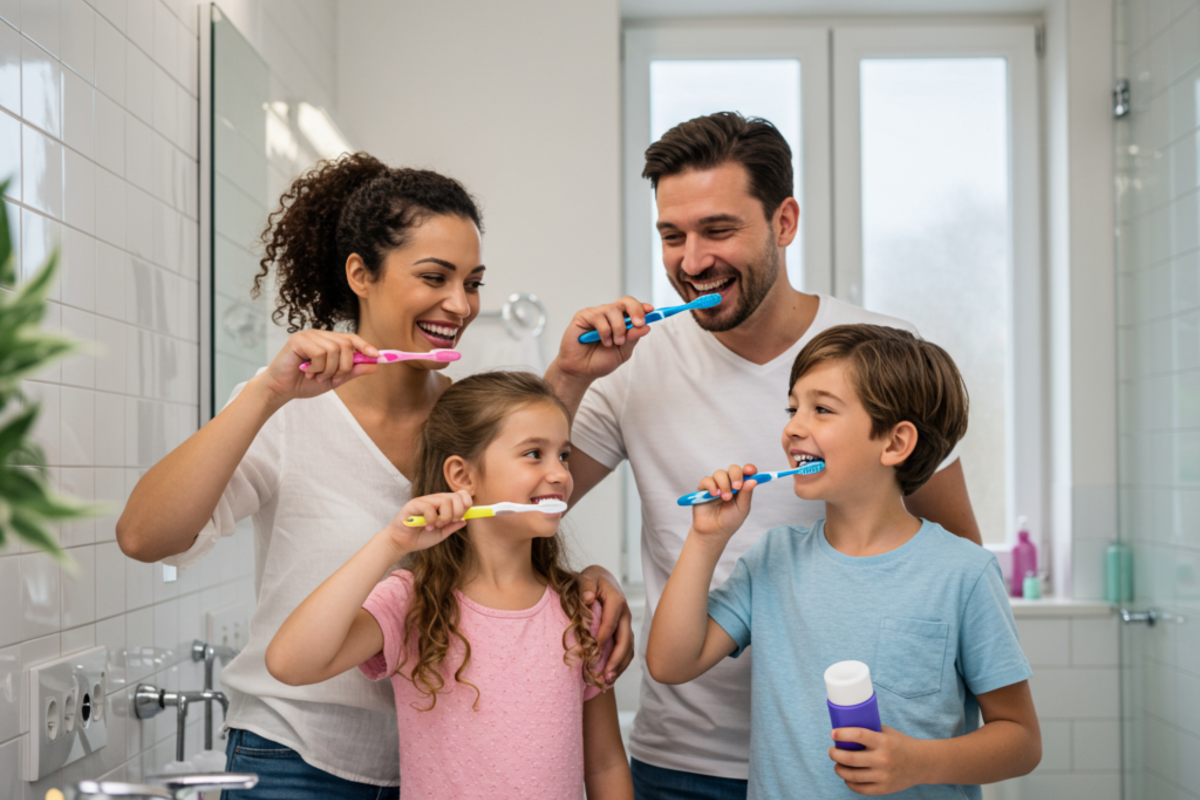
For kids, the routine is: adult-guided, twice a day, fluoride toothpaste, full two minutes.
For adults, it is: soft brush, gentle angle at the gums, thorough coverage, and daily cleaning between the teeth.
That’s the core of it. Not glamorous. Not complicated. Just consistent.
The truth is, proper brushing does not look impressive. It looks a little boring. Small circles. Light pressure. Same routine every day. But boring is fine when it keeps cavities, gum disease, and avoidable dental treatment off your calendar.
And that’s really the point. A good brushing routine should feel ordinary. It should fit into real life, whether you are helping a preschooler spit out toothpaste, reminding a teen with braces to slow down, or protecting your own teeth after years of dental care.
Done well, brushing is one of the simplest things you can do for your mouth. Done poorly, it quietly causes problems.
That difference adds up.