Now Welcoming New Patients

Discover the Benefits of 3D Dental X-Rays in North Vancouver
Seeing Beyond 2D: What Makes 3D Dental X‑Rays Different?
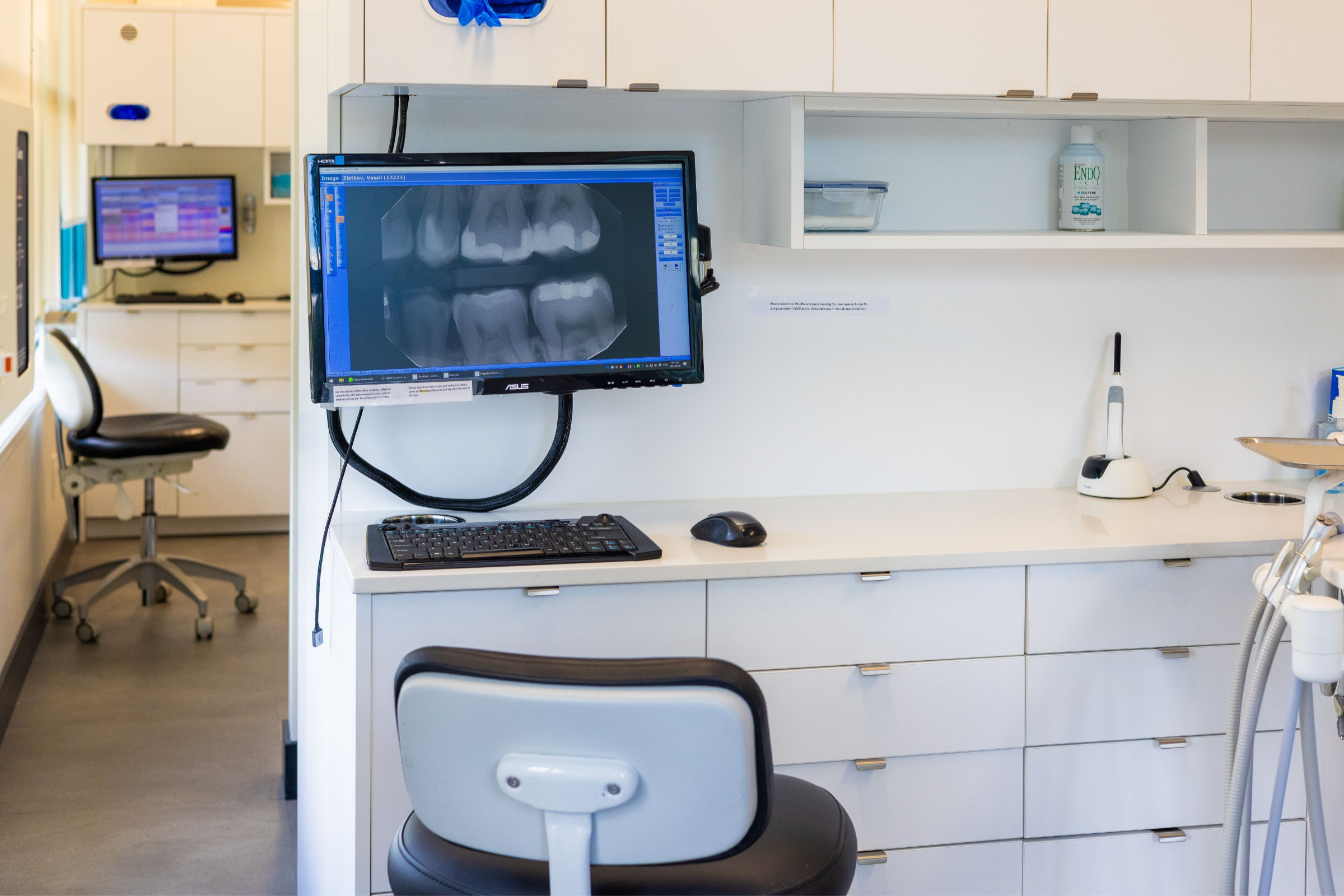
Most people are familiar with the classic dental X-ray—a flat image that lets your dentist glimpse the inside of your teeth and jaw. These traditional 2D X-rays have served dentistry for decades, but as dental care advances, so does the technology we rely on. The main difference between 2D and 3D dental X-rays is perspective: where 2D images offer a single, static view, 3D imaging (often called CBCT, or cone beam computed tomography) creates a dynamic, three-dimensional map of your mouth.
This leap in technology addresses a key challenge—certain anatomical structures and dental issues can overlap or be hidden in 2D images. For instance, a root fracture, a hidden infection, or the full shape of a tooth may not be fully visible. By contrast, 3D X-rays rotate around your head, capturing hundreds of images from every angle. These are then digitally combined to build a complete model of your teeth, jaws, nerves, and even tiny bone details.
This extra dimension unlocks new clarity for your dental team. Dentists can pinpoint the precise location of nerves, assess bone thickness, and uncover problems that might otherwise go undetected. Whether you need restorative dentistry, dental implants, or oral surgery, 3D X-rays help tailor care to your unique anatomy—making dental visits safer, more predictable, and more comfortable for patients of all ages.
Why 3D Imaging Matters for Accurate Diagnosis and Safer Dental Care
Accurate diagnosis is the cornerstone of exceptional dental care. A missed infection or unseen bone defect can lead to ongoing discomfort, repeat procedures, or more extensive treatments down the road. That’s where 3D dental X-rays shine: by offering a complete, layered view of your oral structures, they help dentists detect problems that might be missed with 2D imaging alone.
With 3D imaging, early-stage tooth decay, cysts, abscesses, and hairline fractures become visible even when they’re hidden behind other teeth or jawbone in flat images. This is vital for restorative dentistry, where planning a crown, bridge, or filling depends on knowing the full extent of any damage. It’s also a game-changer for endodontics—root canal treatments—where locating all the tiny canals and identifying infection is key to success.
The safety benefits extend beyond diagnosis. With a 3D roadmap of your jaw, nerves, and sinuses, dentists can avoid sensitive structures during extractions, implant placement, or oral surgery, minimizing the risk of nerve injury or sinus complications. For families in North Vancouver seeking peace of mind, this technology means more predictable treatments and fewer surprises—creating a safer, more comfortable dental experience for both adults and children.
Planning Dental Implants, Oral Surgery, and Bone Grafting with 3D X‑Rays
Dental implants, bone grafts, and complex oral surgeries demand a level of precision that 2D images can’t always provide. Dental implants, for instance, require secure anchoring in healthy bone and careful avoidance of nerves and sinuses. A 3D dental X-ray offers an exact blueprint of your jaw, revealing the height, width, and density of bone in every direction. This helps your dentist determine if you’re a good candidate for implants and plan the ideal placement for long-term success.
When bone loss is present—perhaps due to missing teeth or gum disease—a 3D scan lets your dental team visualize exactly where bone grafting may be needed and how much grafting material is required. This is just as essential for sinus lifts, where working close to delicate sinus cavities requires millimeter-level accuracy.
For oral surgery, such as wisdom tooth extractions or cyst removal, the ability to see the root positions and their proximity to nerves significantly reduces the risk of complications. These comprehensive views allow for more confident treatment planning and informed decision-making, which is especially important for patients with unique jaw shapes, previous dental work, or medical conditions affecting bone health.
Ultimately, using 3D X-rays for surgical planning translates to better outcomes—shorter procedures, faster healing, and fewer unexpected challenges—making advanced dental care safer and more accessible for the North Vancouver community.
How 3D Dental X‑Rays Support Pediatric Dentistry and Family Care
For families, especially those with children or teens, the gentle and precise approach of 3D dental X-rays offers unique advantages. Growing smiles require careful monitoring—baby teeth, adult teeth, and developing jaws all change rapidly. With 3D imaging, dentists can accurately assess tooth eruption, jaw alignment, and detect potential orthodontic concerns before they become major issues.
This technology is particularly helpful in diagnosing problems like impacted teeth, cysts, or unusual tooth development. For young patients who need restorative dentistry or endodontics, 3D scans help dentists see small roots and developing structures that are difficult to interpret in 2D. The detailed images also assist in planning for treatments like dental implants in teens who have lost teeth due to injury or congenital issues.
Families with loved ones who have special needs will appreciate that 3D dental X-rays are fast, non-invasive, and generally more comfortable than traditional bitewing X-rays. There’s no need for uncomfortable film inside the mouth, and the scan is often completed in less than a minute—minimizing anxiety and making dental visits more pleasant for everyone.
By integrating 3D imaging into pediatric dentistry and family care, North Vancouver dental practices can offer personalized, gentle, and proactive treatment, ensuring every family member receives the attention and expertise they deserve.
What to Expect During a 3D Dental X‑Ray at Your North Vancouver Dentist
If your dentist recommends a 3D dental X-ray, you might wonder what the experience involves. The good news is that these scans are designed to be quick and comfortable. Unlike traditional X-rays that require you to bite down on film, a 3D dental X-ray uses a special scanner that rotates around your head while you stand or sit still. The process takes less than a minute and is entirely non-invasive—ideal for children, teens, and adults alike.
Safety is a top priority; modern 3D scanners use focused, low-dose radiation that is carefully measured to minimize exposure. Your dental team will ensure you are properly positioned and may provide a lead apron for added protection. During the scan, there’s no pain or discomfort—you simply remain still as the machine collects detailed images.
Once complete, your dentist reviews the digital 3D model, examining every angle to assess teeth, gums, bone, and surrounding structures. This comprehensive information is used to create a tailored treatment plan, whether you need restorative dentistry, dental implants, oral surgery, or simply want a clearer picture of your oral health. Your dentist will walk you through the results, answer any questions, and discuss next steps with warmth and clarity—ensuring you feel informed and confident about your care in North Vancouver.